These quarterly reports provide the public with the latest information on the Galileo Open Service measured performance statistics, in particular, on parameters such as: Read more…
These quarterly reports provide the public with the latest information on the Galileo Open Service measured performance statistics, in particular, on parameters such as: Read more…
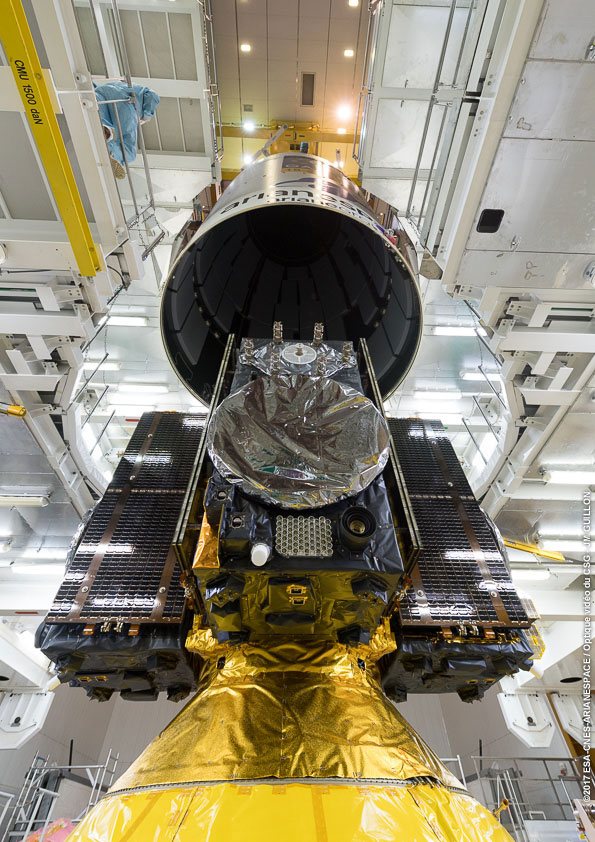
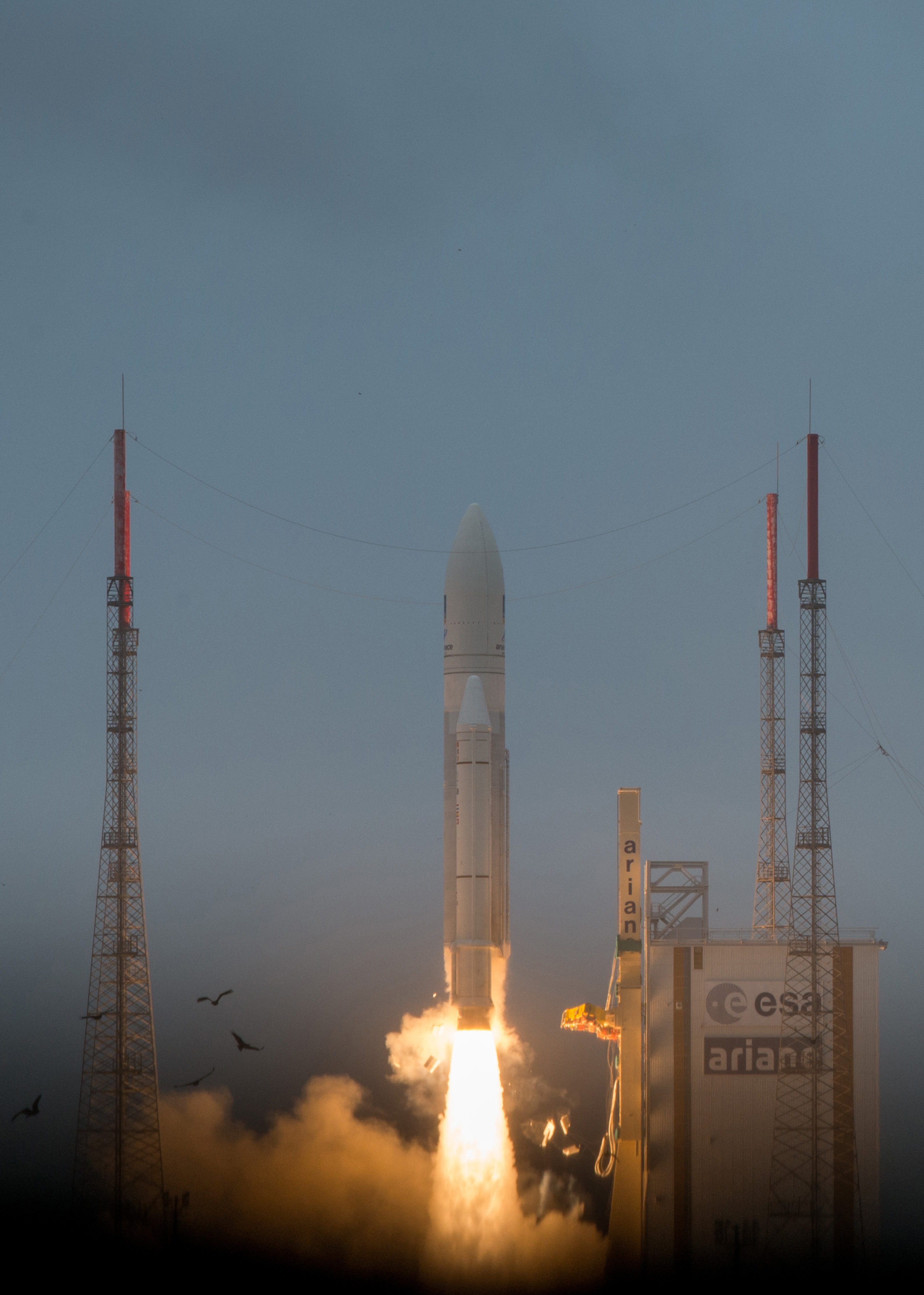
Europe has four more Galileo navigation satellites (satellites 19–22) in the sky following their launch from Europe’s Spaceport in Kourou, French Guiana at 18:36 GMT (19:36 CET, 15:36 local time), on an Ariane 5 rocket, operated by Arianespace.
Europe has four more Galileo navigation satellites in the sky following their launch on an Ariane 5 rocket. After today’s success, only one more launch remains before the Galileo constellation is complete and delivering global coverage.
Ariane 5, operated by Arianespace under contract to ESA, lifted off from Europe’s Spaceport in Kourou, French Guiana at 18:36 GMT (19:36 CET, 15:36 local time), carrying Galileo satellites 19–22. The first pair of 715 kg satellites was released almost 3 hours 36 minutes after liftoff, while the second pair separated 20 minutes later. Read more…
Europe’s Galileo satellite navigation system will come a giant leap nearer completion on Tuesday 12 December, as four more Galileo satellites are launched into orbit by Ariane 5.
Liftoff from Europe’s Spaceport in Kourou, French Guiana is scheduled for 18:36 UTC (19:36 CET, 15:36 local time), carrying Galileo satellites 19–22.
The launcher’s attitude and trajectory are controlled by the two onboard computers, located in the Ariane 5 vehicle equipment bay (VEB). Read more…
The Galileo global navigation satellite system has been offering initial services since almost a year and the performances are great. Independent measurements and evaluation of the system show that the European system is currently the best satellite positioning system in the world.
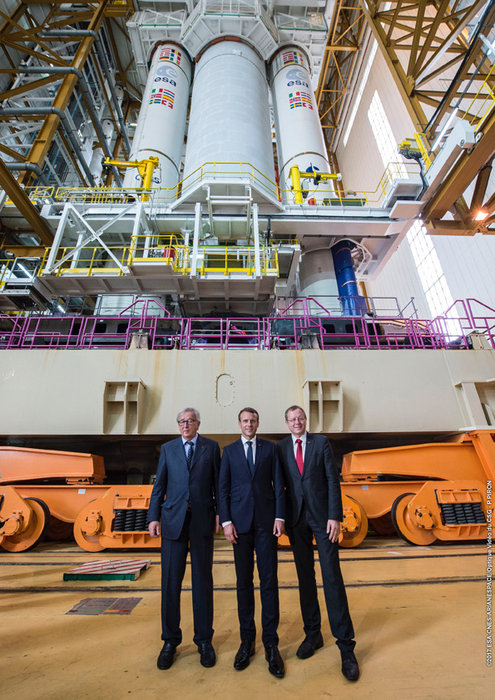
A symbolic image of the European Space Port in Kourou (French Guiana) as the President of the European Commission Jean-Claude Juncker, the French President Emmanuel Macron, and
the Director General of the European Space Agency Jan Wörner, stand in front of the Ariane 5 launcher, which will soon carry 4 more Galileo satellites into space.
On 12 December at 19:36 CET, an Ariane 5 will launch from Kourou with 4 new Galileo satellites, adding to the constellation which is set to be completed next year.
For its 11th launch of the year, and the sixth Ariane 5 liftoff from the Guiana Space Center (CSG) in French Guiana during 2017, Arianespace will orbit four more satellites for the Galileo constellation.
This mission is being performed on behalf of the European Commission under a contract with the European Space Agency (ESA).
For the second time, an Ariane 5 ES version will be used to orbit satellites in Europe’s own satellite navigation system. At the completion of this flight, designated Flight VA240 in Arianespace’s launcher family numbering system, 22 Galileo spacecraft will have been launched by Arianespace with Soyuz and Ariane 5 launchers. Read more…

The Council adopted conclusions on the report by the Commission containing a mid-term evaluation of Galileo, EGNOS and the performance of the European GNSS Agency. The conclusions underline the strategic importance of Europe’s satellite navigation systems and set out a number of recommendations on their implementation and evolution. Read more…