The European Satellite Navigation Competition (ESNC) is an international contest awarding the best services, products or business solutions that make use of satellite navigation in everyday life. The 2015 prize pool is valued at EUR 1,000,000 and comprises cash awards, support-packages, coaching and data access. Prizes will be awarded by key GNSS stakeholders, such as the European GNSS Agency (GSA), the European Space Agency (ESA) or the German Aerospace Center (DLR). Read more…
Author Archives: Galileo GNSS
Guiana Space Centre – Operations
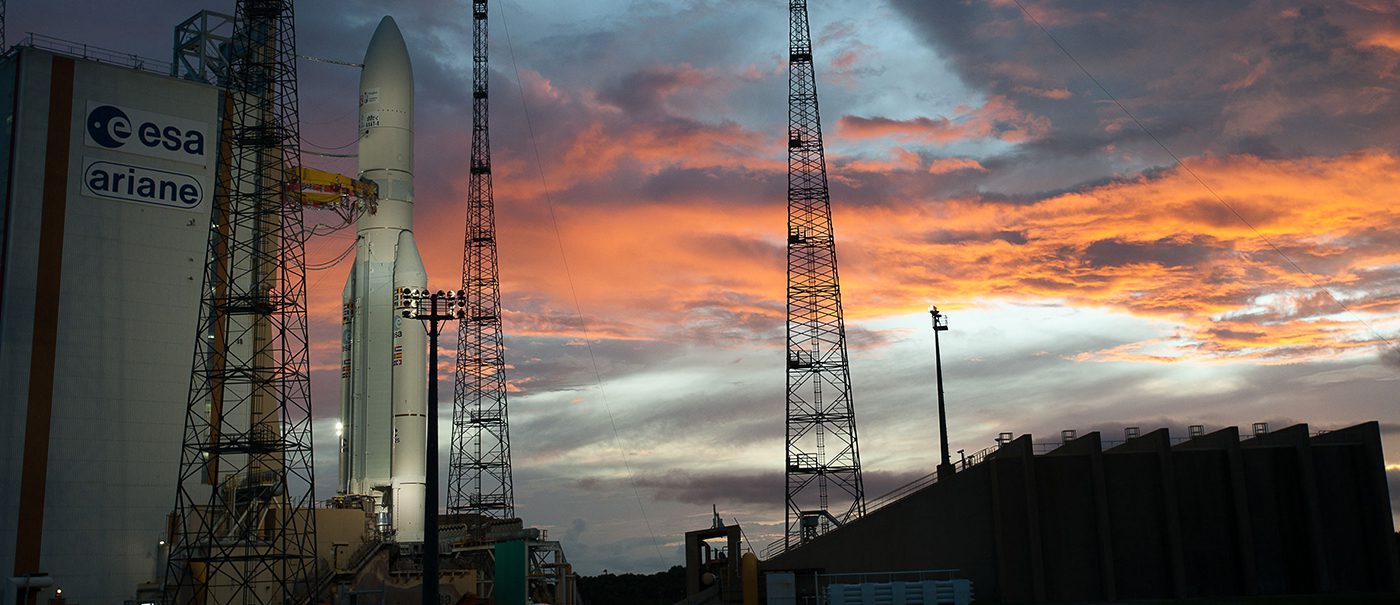
Ariane operations began in 1979 with the Ariane 1 version. Since then, more than 220 Ariane flights have been performed from the Spaceport, where the Ariane 5 now operates as Arianespace’s workhorse heavy-lift launch vehicle.
Arianespace’s launcher family was expanded in 2011 with the introduction of its medium-lift Soyuz at French Guiana, and joined in early 2012 by the lightweight Vega. Read more…
Guiana Space Centre – Actors
A launch is the result of teamwork that brings together skilled personnel from multiple organizations.
Arianespace
As the commercial operator of the Ariane, Soyuz and Vega launch systems at French Guiana, Arianespace is responsible for placing its customers’ satellite payloads into orbit. It markets launch services, acquires the launch vehicles, prepares the missions and handles all relations with customers – with the dual goals of being a leader in commercial space transportation and guaranteeing Europe’s independent access to space. At the Spaceport in French Guiana, Arianespace manages the industrial team that integrates and prepares for launch, and the company oversees the satellite campaign from the spacecraft’s arrival through its injection into orbit. Read more…
Next steps after successful launch of satellite 7 & 8
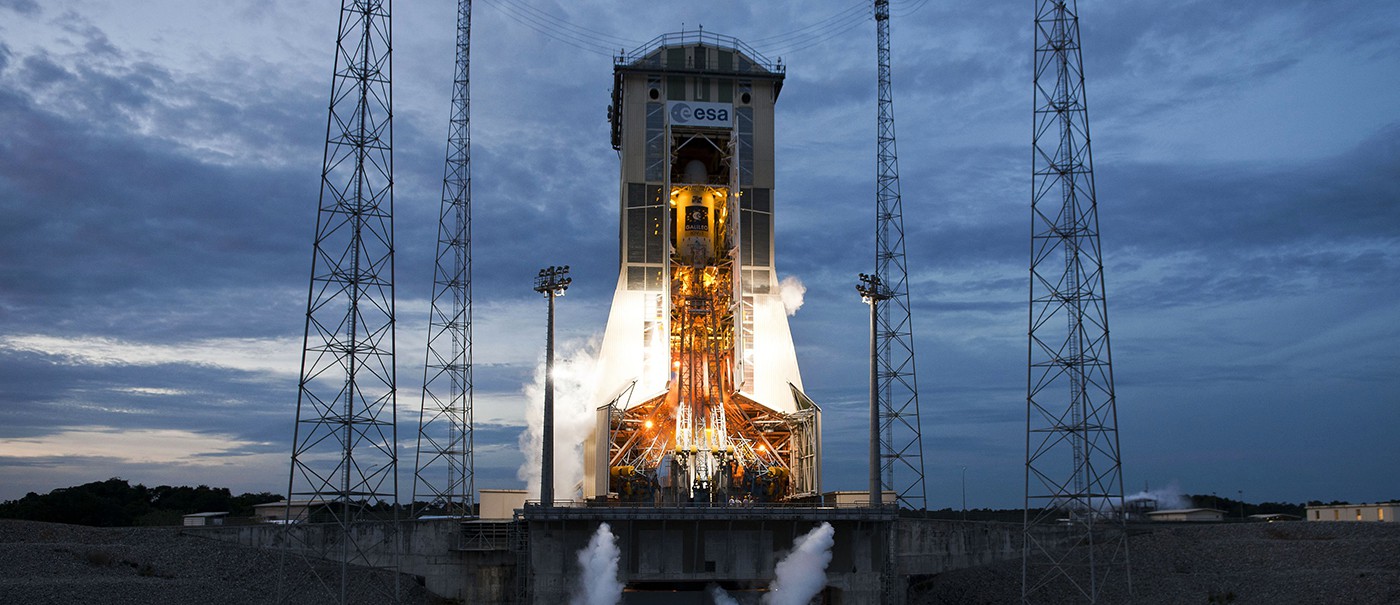
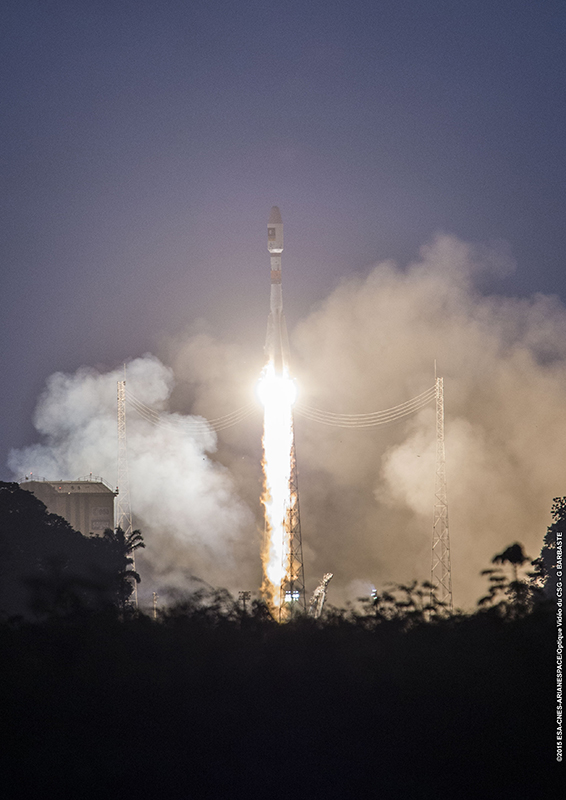
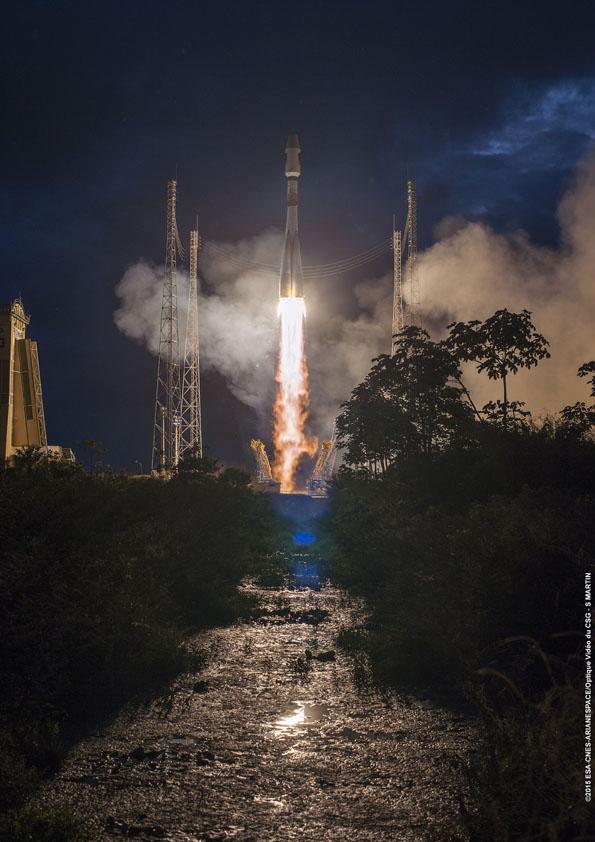
The EU’s Galileo satellite navigation system now has eight satellites in orbit following the launch of the latest pair. Galileo 7 & 8 lifted off at 21:46 GMT (22:46 CET) on 27 March from Europe’s Spaceport in French Guiana on top of a Soyuz rocket. All the Soyuz stages performed as planned, with the Fregat upper stage releasing the satellites into their target orbit close to 23 500 km altitude, around 3 hours 48 minutes after liftoff.
Following initial checks, run jointly by ESA and France’s CNES space agency from the CNES Toulouse centre, the two satellites will be handed over to the Galileo Control Centre in Oberpfaffenhofen, Germany and the Galileo in-orbit testing facility in Redu, Belgium for testing before they are commissioned for operational service. This is expected in mid-year. Read more…
Galileo liftoff replay [Video]
The liftoff of Soyuz flight VS11 from Europe’s Spaceport in French Guiana took place as scheduled on 21:46:18 GMT (22:46:18 CET) on Friday 27 March 2015. The launcher was carrying Europe’s seventh and eighth Galileo navigation satellites, due to separate from their Fregat upper stage into their assigned orbit on 3 h 47 min after lift-off.
European Commissioner, Elżbieta Bieńkowska: “EU succesfully launches two Galileo satellites”
After placing two more Galileo satellites into orbit and receiving signals proving that they are positioned as expected, Elzbieta Bienkowska, European Commissioner for Internal Market, Industry, Entrepreneurship and SMEs, commented: “The successful launch of two Galileo satellites takes us one step closer to a global European satellite navigation system. Today we demonstrated again that Europe has state-of-the-art know-how, cutting edge technology, and the vision and determination to accomplish great things. Whether you’re hoping to benefit from the next generation of in-car Satellite Navigation – or the reassurance of knowing the coastguard can deploy Search and Rescue – Galileo will soon provide you with great opportunities.” Read more…
Soyuz VS11 successfully launches Galileo 7 & 8
Arianespace has orbited the two latest satellites in the Galileo constellation, the seventh and eighth named “Adam” and “Anastasia”. The Soyuz VS11 launch from the Guiana Space Center took place on Friday, March 27 at 21:46 GMT. The medium-lift Soyuz performed a flight of nearly 3 hours and 48 minutes to deploy both spacecrafts.
After an initial powered phase of Soyuz’ three lower stages, the launch included two burns of the Fregat upper stage, separated by a three-hour-plus ballistic phase, to place the two 700-kg.-class satellites at their targeted deployment point. Total payload lift performance for the flight was estimated at 1,597 kg. on a mission to a circular medium-Earth orbit. Read more…