
Author Archives: Galileo GNSS

@GalileoGNSS to visit Kourou Galileo site

@GalileoGNSS is soon visiting one of the most exciting sites for people who love space related projects in general and Galileo in particular: the European Space Centre in Kourou (French Guiana).

This is the place were the Galileo satellites are launched inside a Soyuz rocket. At our return, we hope to provide all our readers a complete photo-report of the mission, for which we kindly ask for your collaboration. If you are specially interested in knowing a specific department/building in the Space Centre, please, leave a comment below and we will do our best to satisfy all of our proposals. Read more…
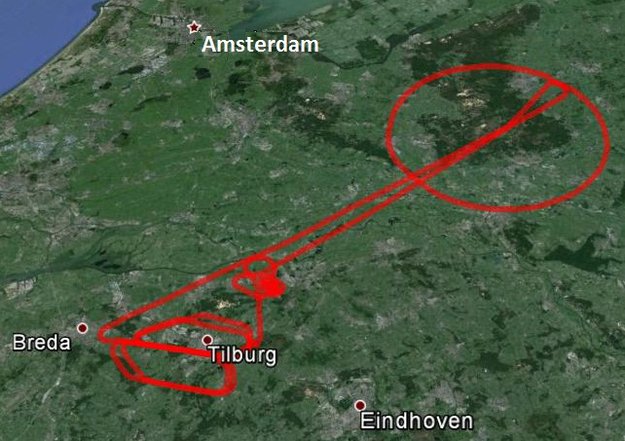
Galileo, first aircraft tracking fix

The four Galileo satellites in orbit have achieved their first aerial fix of longitude, latitude and altitude, marking the first time ever that Europe has been able to determine the position of an aircraft using only its own independent navigation system.

Aircraft tracking via Galileo

Aircraft tracking via Galileo

This milestone took place on a Fairchild Metro-II above Gilze-Rijen Air Force Base in the Netherlands at 12:38 GMT on 12 November 2013. Read more…

Sensovo reaches second position in ESNC

Sensovo reaches second place in the 10th edition of European Satellite Navigation Competition (ESNC). Jan Walter Schroeder and his team presented the world’s first commercial wearable tactile navigation system, a smartphone app with a waist belt that guides the wearer via vibration.

The Navipal app uses thephone’s internal GPS receiver for positioning and communicates via bluetooth with the belt, which carries eight tiny vibrating motors spaced equally and powered by a rechargeable battery. The belt provides navigation cues by vibrating one or more motors in the needed direction. The intensity and duration change according to the distance to the destination. Read more…

Kinexon GmbH wins 10th edition of ESNC

A small but revolutionary motion sensor worn by athletes has won the 2013 European Satellite Navigation Competition (ESNC). The idea, developed by Kinexon, consist in providing accurate, realtime information on an athlete’s condition.

The device is based on a small sensor cell that offers precise localisation and tracking. Accurate to about 10 cm and updated 20 times a second, it captures even rapid movement. Read more…

Time between launches will be decreased at European spaceport

Europe’s Arianespace commercial launch consortium agreed to spend 36.5 million euros ($50 million) to build a fueling facility at Europe’s spaceport in Kourou to reduce the time needed between launches of the heavy-lift Ariane 5, medium-lift Soyuz and light-class Vega vehicles.

The building is scheduled to be operational in 2015. CNES (French space agency) owns the property to be used for the new facility, which will be located at the Soyuz launch installation. Read more…

Galileo satellites testing in ESTEC

The 22 FOC Galileo satellites being built by OHB in Germany with a payload from Surrey Satellite Technology Ltd in the UK will pass through ESTEC for testing on their way to launch in the next few years.

The testing of the first two FOC satellites, already in ESTEC, is especially rigorous because the overall design is being validated, while the next batch of satellites will undergo lighter acceptance testing instead. Read more…