An app that lets your smartphone work directly with Galileo and check performance from raw satellite signal measurements is now available for download from the Google Play Store.
GNSS Compare app lets your smartphone work directly with Galileo
Developed by ESA trainees in their spare time, the GNSS Compare app was the winner of an internal ESA competition this summer. Read more…
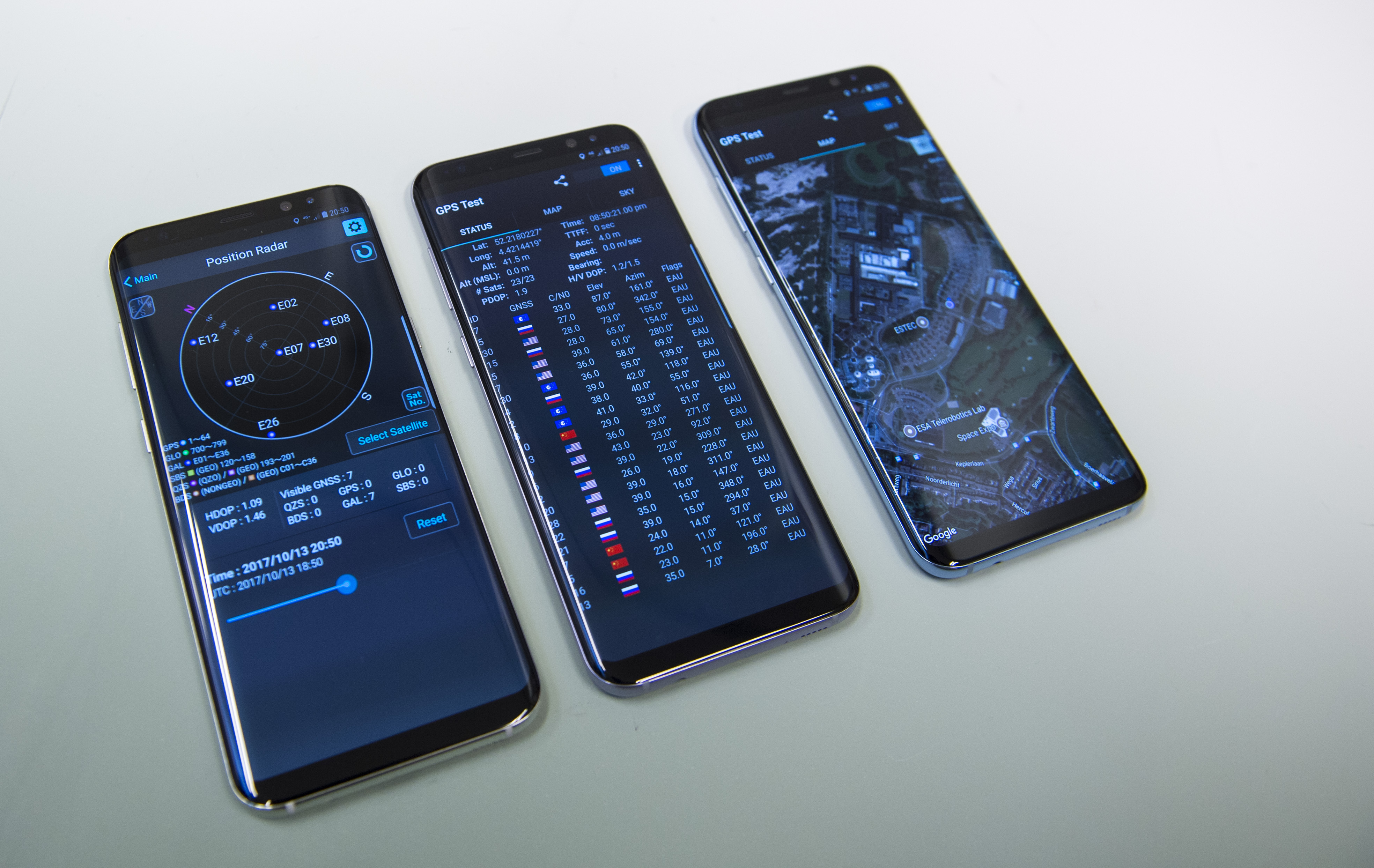
Students and research trainees across Europe are invited to take part in ESA’s new Galileo smartphone app competition – to develop an app capable of performing fixes using raw Galileo satnav measurements.
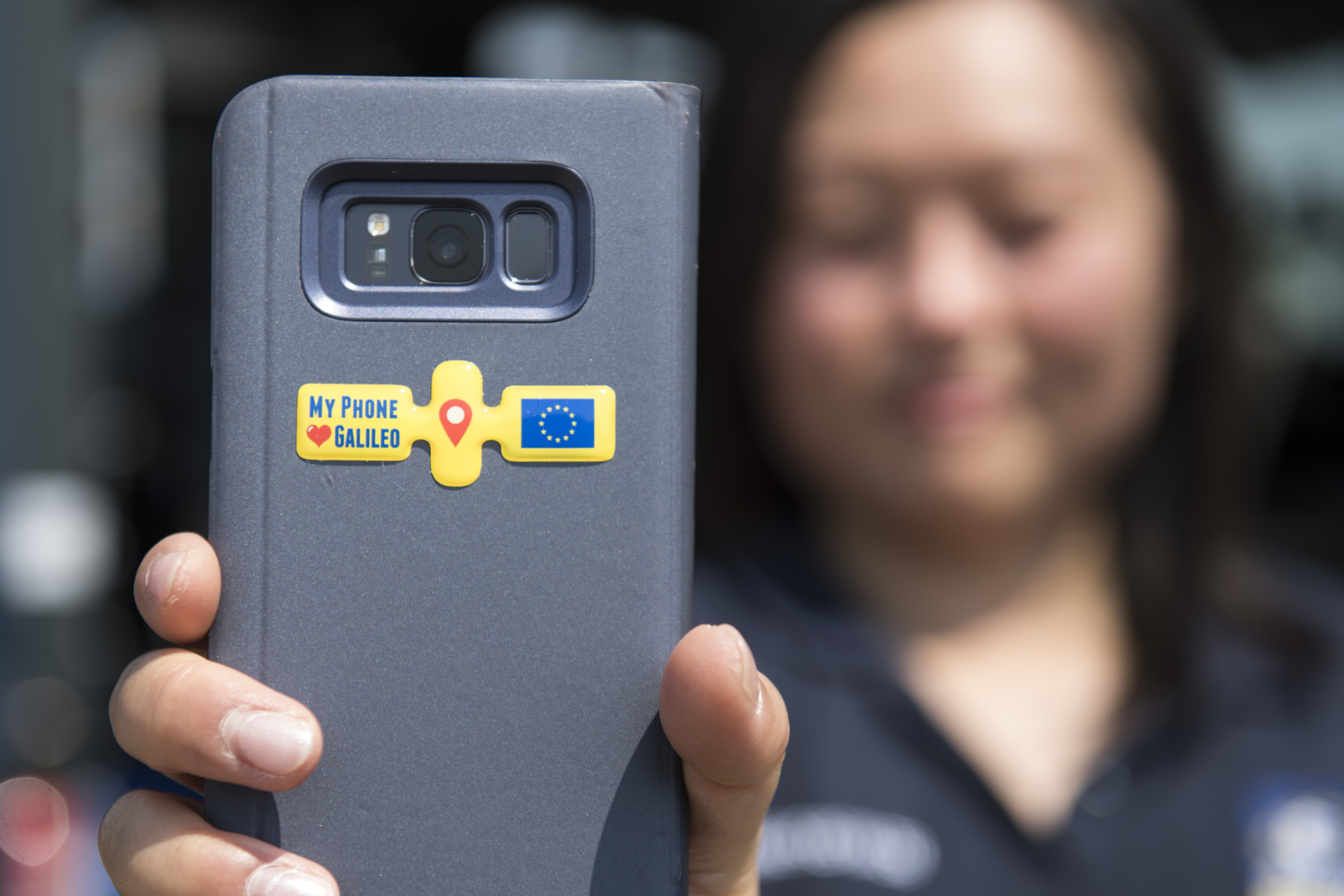
Galileo seen at work with commercially available Samsung S8+ smartphones
Run by ESA in collaboration with the European Global Navigation Satellite Systems Agency – GSA – plus the European Commission with the support of Google, this Galileo app competition is open to all students from European universities and trainees in posts at European research and development organisations. Read more…
With the release of Android 7 (Nougat) in 2016, Google made GNSS raw measurements available to smartphone users for the first time, giving them access to a range of advanced GNSS processing techniques that had previously been restricted to more professional GNSS receivers.
A GNSS tutorial at IPIN 2018 highlighted the benefits of using raw measurements in Android
A tutorial at the IPIN 2018 indoor positioning and navigation conference in Nantes on 24 September explained how users can access raw measurements and examined how they are contributing to better location performance in mass market applications. Read more…
The successful management of urban mobility will ultimately determine how well cities of the future thrive to ensure the quality of life of their citizens.
The two European Union (EU) navigation programmes, EGNOS and Galileo, are helping to achieve this by using EU-owned infrastructure that gives citizens reliably robust positioning of the vehicles and goods on which they depend daily. These solutions, which draw on the principle of multimodality, also empower mobility providers and public authorities worldwide. Read more…
ESA challenged its young graduate and national trainees to develop a smartphone app to perform satnav fixes using only Galileo satellites. Three teams developed apps in their spare time, presenting their results to a jury of experts from ESA, the European Global Navigation Satellite Systems Agency (GSA) and Google.
“I’m very impressed,” said Javier Benedicto, ESA’s Galileo programme manager. “With little detailed knowledge of satellite navigation, these teams have developed something that didn’t exist just a few months ago. Working on Galileo we love to see that the systems we’re putting together can reach widespread application and inspire new uses.” Read more…
The Galileo constellation took another big step towards full operational capability with the successful launch on 25 July of four satellites on-board an Ariane 5 launcher. Representatives of leading industry that have adopted Galileo then held a special press briefing for journalists from across the continent to address updates on how European citizens and businesses are already taking advantage of benefits delivered by Galileo.
“This launch and the Galileo services that these satellites will help provide is testament to the European Union’s ambition to position itself as one of the world’s preeminent space powers,” said Matthias Petschke, European Commission Director of EU Satellite Navigation Programs, in a press release this week. Read more…
Following the April 1 entry into force of the European eCall regulation, requiring all new car and light van types sold in the EU to be fitted with the emergency systems, Swedish automobile manufacturer Volvo Cars has taken the lead as the first car-maker to equip its vehicles with eCall.
Volvo is the first car maker to integrate eCall system with Galileo capabilities
The eCall device in the Volvo vehicles is manufactured by ACTIA Nordic in Sweden and has been successfully tested by NavCert´s eCall Laboratory in Germany. The readiness of automotive suppliers and technical services to equip the vehicles was partially due to actions taken by the European GNSS Agency (GSA) and the European Commission’s Joint Research Centre, who launched a testing campaign and produced a joint report containing a set of guidelines to facilitate the implementation of eCall testing in compliance with the EU Regulation. Read more…