Category Archives: Galileo Services

Galileo Services

From space to civil protection – How SUNSHINE supports disaster resilience in Europe

Europe’s risk landscape is changing rapidly, with climate-driven hazards and complex crises placing increasing demands on civil protection authorities. As disasters become more frequent, intense and cross-border by nature, the ability to anticipate events, efficiently prepare, respond rapidly, and coordinate across systems and institutions depends on access to timely, reliable, and interoperable information.
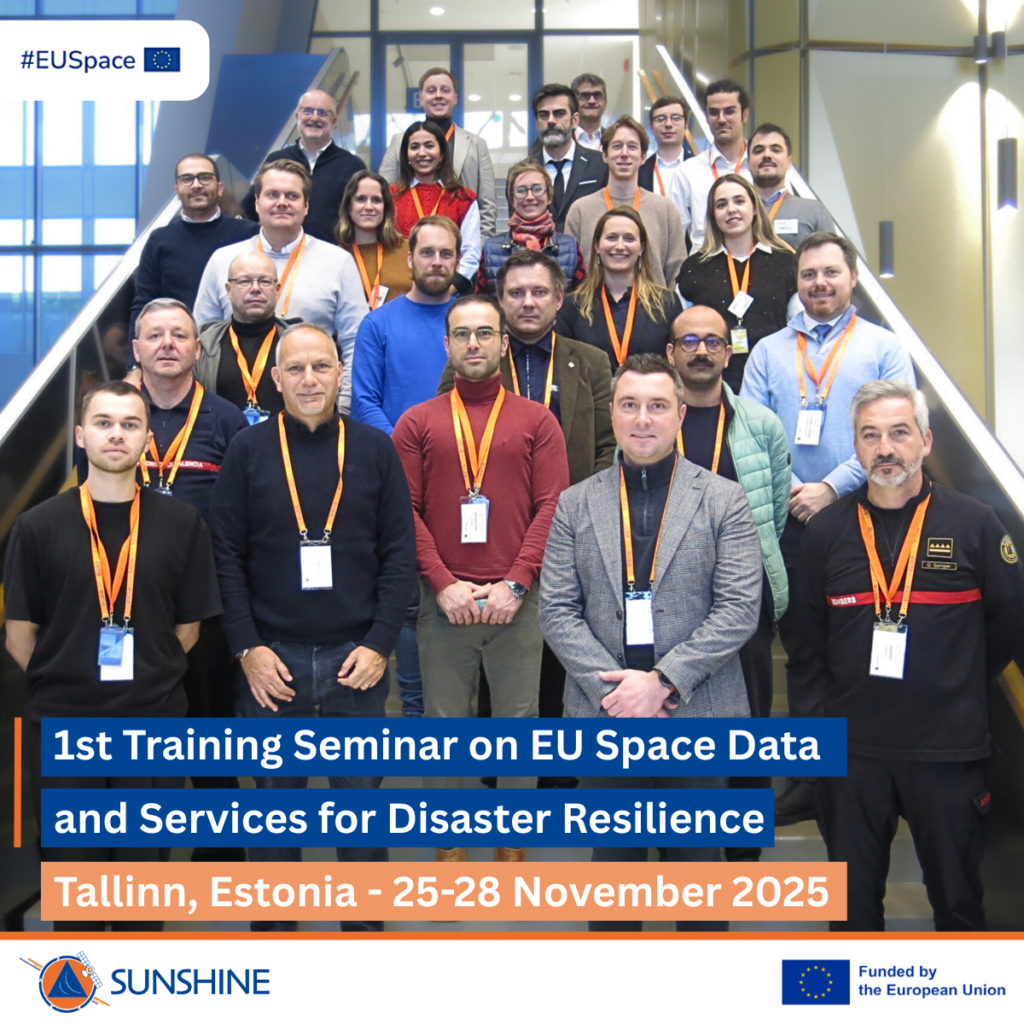
Group photo of the participants to the SUNSHINE Training Seminar in Tallinn in November 2025. Credit: European Union, SUNSHINE Project.

Space-based data and services are becoming central to this effort, yet their operational uptake remains uneven across Europe. Bridging this gap between technological potential and real-world and operational use is precisely the mission of SUNSHINE, an EU-funded project designed to ensure that Europe’s space investments deliver tangible benefits for the safety and protection of EU citizens. Read more…


I/NAV improvements now available to Galileo Open Service users

As of August, 2023, operational Galileo GNSS satellites, with some exceptions, have been updated and are now transmitting an improved I/NAV message. Users will see an enhancement in the Galileo E1 Open Service (OS) performance in terms of robustness and a significant reduction in time to first fix in challenging environments, with both unassisted and assisted GNSS. Backward compatibility is assured, with no impact on legacy receivers and low complexity implementation within OS receivers.

ESA ESTEC will be one of the sites used for the I-NAV test campaign

ESA ESTEC will be one of the sites used for the I-NAV test campaign

Galileo satellites broadcast different types of data in four navigation messages: the F/NAV and I/NAV navigation messages, a commercial navigation message (C/NAV) and a governmental navigation message (G/NAV). The latest upgrade comprises new features added to the I/NAV message, carried by the E1-B signal. Read more…

Galileo OSNMA tests underway

Galileo has started testing Open Service Navigation Message Authentication (OSNMA) in the signal-in-space, allowing the first-ever OSNMA-protected position fix to be successfully computed. Testing will continue over the next months, ahead of a so-called “public observation” phase. This is the first-ever transmission of authentication features in open GNSS signals of a global navigation system.

OSNMA test signals are being broadcast by the Galileo constellation

OSNMA test signals are being broadcast by the Galileo constellation

The Galileo OSNMA is an authentication mechanism that allows GNSS receivers to verify the authenticity of GNSS information, making sure that the data they receive are indeed from Galileo and have not been modified in any way. Read more…

Precise Point Positioning opens up new possibilities for mass market applications

Precise Point Positioning is becoming an attractive alternative technique to RTK, removing GNSS system errors to provide global high accuracy positioning, HERE has recently introduced the service HERE HD GNSS Positioning, a cloud-based service that provides sub-meter positioning for devices equipped with GNSS receivers.

Precise Point Positioning, new possibilities for mass market applications

Precise Point Positioning, new possibilities for mass market applications

Precise Point Positioning (PPP) correction services have been in the market for a long time to either assist vessels maneuver at ports or for measuring instruments for construction and geodesy. Today, highly precise positioning goes beyond industrial use cases and is available to mass market applications and devices. Read more…

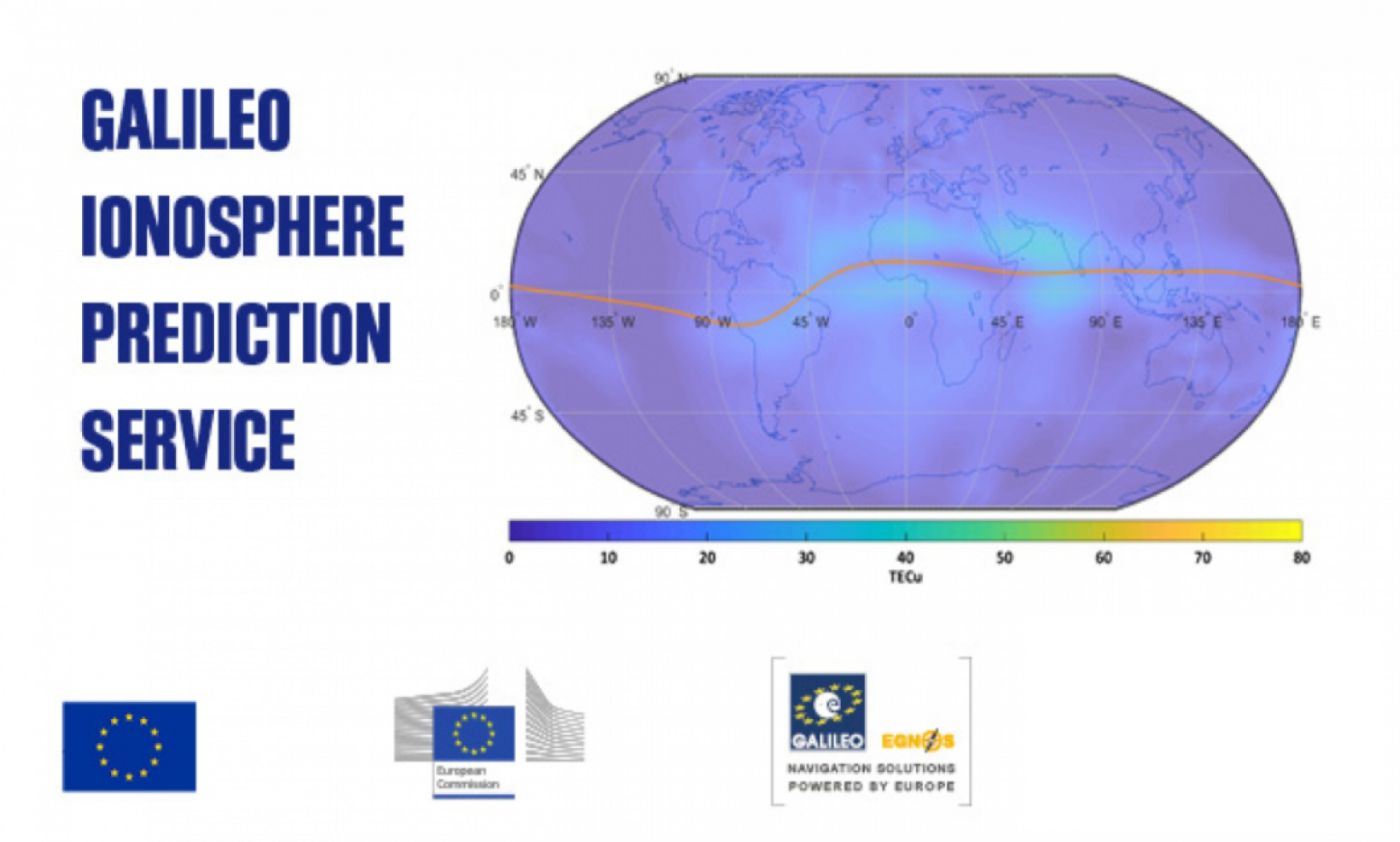
Galileo Ionosphere Prediction Service

Ionospheric effects can be a major source of disruption to GNSS signals, so it is important to be able to predict and compensate for these disturbances. With this in mind, the European Commission-funded Galileo Ionosphere Prediction Service (IPS) monitors ionospheric activity and informs GNSS users in good time of an upcoming event that could disrupt GNSS signals and applications.

Galileo Ionosphere Prediction Service

The IPS anticipates any degradation of performance, allowing operators to put in place mitigation measures in good time

The IPS monitors and forecasts solar and ionospheric activity and predicts its effect on GNSS signals and on the final performance of user applications. The Service makes it possible to anticipate any degradation of performance, allowing operators to put in place mitigation measures in good time. Read more…

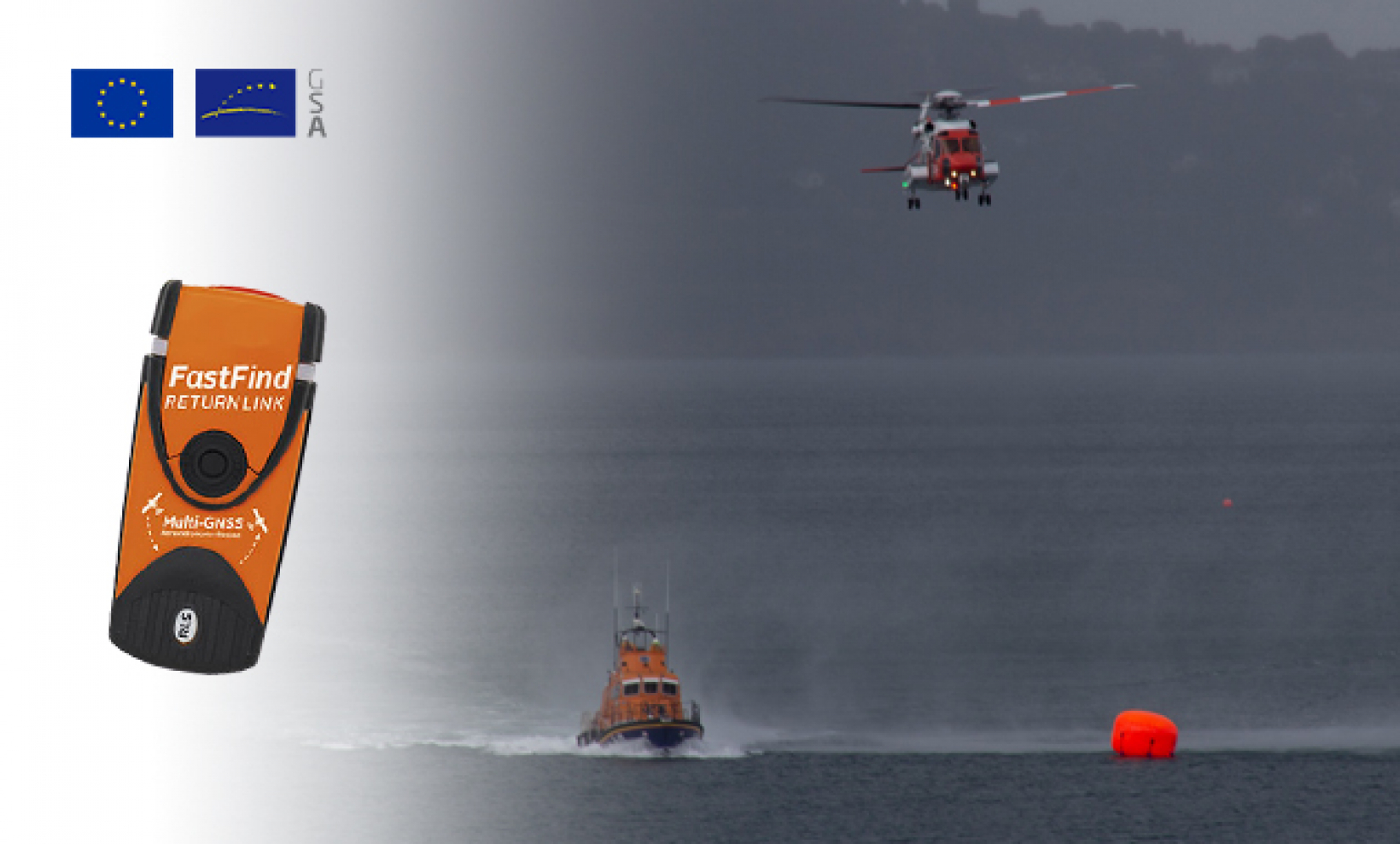
First Galileo Return Link Service PLB to be released in Europe

The first Galileo Return Link Service Personal Location Beacon (PLB) developed under the H2020 funded Helios project will be released in December 2020 across 18 European countries.

The FastFind ReturnLink PLB transmits the user’s unique ID and GNSS location via the global network of Cospas-Sarsat search and rescue satellites

The FastFind ReturnLink PLB transmits the user’s unique ID and GNSS location via the global network of Cospas-Sarsat search and rescue satellites

In close collaboration with the European GNSS Agency and within framework of the H2020 HELIOS project, Orolia has been working to equip SAR beacons with the breakthrough Galileo Return Link Service. Declared operational in January 2020, the Galileo Return Link Service is a unique feature of Galileo – Europe’s Global Navigation Satellite System – it allows people in distress to receive an automatic acknowledgement that their signal has been received and their location is known. Read more…

With GNSS Spoofing Attacks on the Rise, Resilience and Robustness Go Hand-in-Hand

Just five years ago, initiating a GNSS spoofing attack required not only high-priced equipment but university-level engineering expertise. Now, the technology and much of the software is freely available online, and bad actors with limited skill can use it. Faced with high-profile incidents such as the 2019 “Crop Circle” event in China, where ships entering the port of Shanghai were affected by spoofing at the mouth of the HuangPu river, and a similar event in Iran, we can see that the potential global impact is substantial.

Understanding the threat of spoofing can help you to mitigate

Understanding the threat of spoofing can help you to mitigate

Our presentation* at ION GNSS+ 2020 detailed the technical aspects of our lab tests of GNSS receivers to see how they reacted to spoofing and meaconing attempts. This is the first time a detailed study of Read more…