
Soyuz VS11 successfully launches Galileo 7 & 8

Arianespace has orbited the two latest satellites in the Galileo constellation, the seventh and eighth named “Adam” and “Anastasia”. The Soyuz VS11 launch  from the Guiana Space Center took place on Friday, March 27 at 21:46 GMT. The medium-lift Soyuz performed a flight of nearly 3 hours and 48 minutes to deploy both spacecrafts.
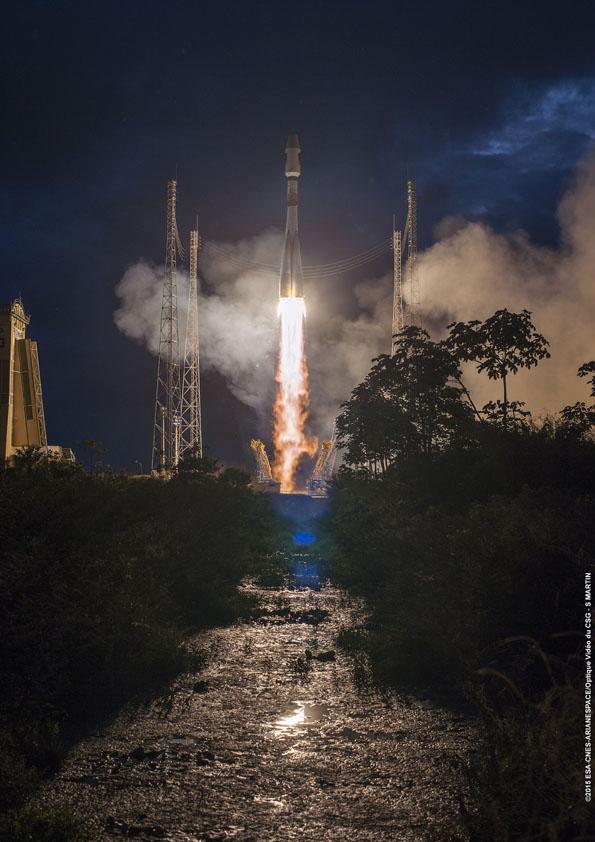
Galileo Soyuz-VS11 (27-March 2015)
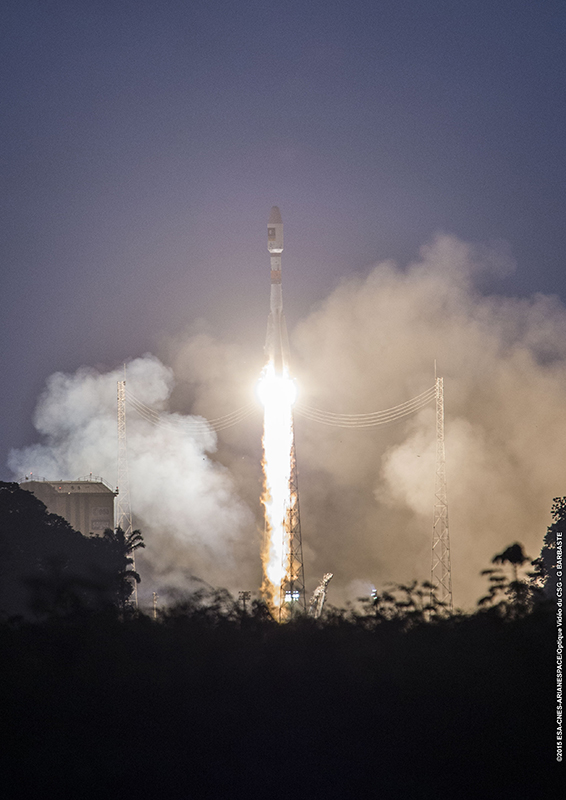
Galileo Soyuz-VS11 (27-March 2015)

Galileo Soyuz-VS11 (27-March 2015)

Galileo Soyuz-VS11 (27-March 2015)

After an initial powered phase of Soyuz’ three lower stages, the launch included two burns of the Fregat upper stage, separated by a three-hour-plus ballistic phase, to place the two 700-kg.-class satellites at their targeted deployment point. Total payload lift performance for the flight was estimated at 1,597 kg. on a mission to a circular medium-Earth orbit. Read more…

Watch Galileo launch-4 live

The seventh and eighth Galileo satellites are scheduled for launch tomorrow, March 27, at 21:46:18 GMT (22:46:18 CET) atop a Soyuz ST-B rocket from Europe’s Spaceport in French Guiana. Streaming starts at 21:26 GMT (22:26 CET) at the European Space Agency website.

The first three stages of the Soyuz rocket will take the Galileo satellites and their Fregat upper stage into low orbit. Then the reignitable Fregat, as much a spacecraft as a rocket stage, will take over the task of hauling the satellites higher through a pair of burns. The satellites will be released in opposite directions by their dispenser once they reach their set 22,522 kilometer-altitude orbit 3 hours, 47 minutes, 57 seconds after launch. Read more…

Soyuz is in the launch zone – Soyuz VS11

The Soyuz for Arianespace’s next VS11 mission is in the launch zone at French Guiana, where it stands ready to receive the two Galileo satellites.

Applying procedures that have been followed since the workhorse Soyuz launcher inaugurated the Space Age, the basic three-stage vehicle for March 27 flight emerged today from its MIK integration building in the Spaceport’s northwestern sector (Soyuz site at Europe’s Spaceport).

Riding horizontally on a transporter/erector rail car, Soyuz was transferred to the ELS launch zone, which was followed by its erection to the vertical orientation and positioning over the launch pad, suspended in place by four large support arms. Read more…